


Reference: 1232



Money plant, also known as Annual Honesty or Lunaria annua in Latin, is a fast-growing plant native to Europe and the Mediterranean region. It belongs to the Brassicaceae family. Generally reaching a height of 50 cm, it is sometimes called "Judas' Penny." Its Latin name means "moon-like," referring to its decorative seed pods.
This original plant produces elegant flowers composed of four petals that appear in spring. They are pale violet and gathered in clusters. The highly fragrant bloom is very attractive to pollinators, especially bees.
Its leaves are large, oval, and serrated with a slightly hairy texture, reaching up to 20-30 cm in length.
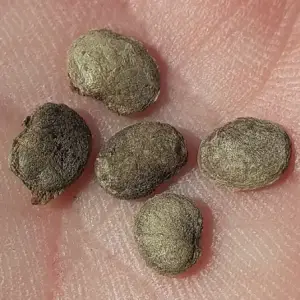
Annual Honesty seeds are flat, slightly rounded, and gray in color, measuring 7 mm in length.
The fruits are particularly distinctive: flat, translucent pods that resemble silver coins. These pods, measuring 3 to 5 cm, dry out at the end of the season and take on a shimmering silvery hue.
This plant prefers well-draining, fertile, and slightly moist soil. A mix of garden soil and compost or a rich organic potting soil is ideal.
The Silver Dollar loves sunny locations. While it can tolerate shade, this may reduce the abundance of its flowering. Full sun exposure promotes healthier development and better blooms.
It thrives in temperatures between 15°C and 25°C. It is very hardy and resists freezing winter temperatures well, with a USDA hardiness zone of 4a.
Watering should be regular to keep the soil moist, especially during dry spells. However, avoid waterlogging, which can cause root rot.
This plant is primarily propagated by seeds or by root division. Division can be done in the spring by separating the clumps and replanting them immediately.
Prune back dry branches at the end of the year.
Your review appreciation cannot be sent
Report comment
Report sent
Your report cannot be sent
Write your review
Review sent
Your review cannot be sent
Reference: 1167

check_circle
check_circle


