


Reference: 1232



Bittersweet, also known as Bittersweet Nightshade or Solanum dulcamara, is a hardy climbing shrub measuring 50 cm to 2 meters in height. It is fast-growing and belongs to the large Solanaceae family. This vine is native to Europe, Asia, and North Africa.
The leaves are oval, alternate, deciduous, and often feature two lobes at the base. They generally measure between 5 and 10 cm in length. The foliage is green, sometimes with a slightly glaucous (bluish-grey) tint.
The purple flowers are grouped in terminal clusters. Each flower has five petals and a star-like shape. Flowering takes place in June and July.
Its fruits are small, round red berries measuring about 1 cm in diameter. They are toxic to humans if ingested in large quantities, although birds can eat them without issue.
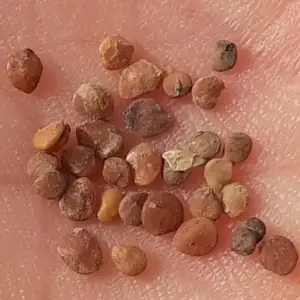
Bittersweet seeds from Solanum dulcamara are small and flat. They are often dispersed via the fruits consumed by birds.
It is important to use rich, well-drained soil that is slightly acidic to neutral. Clay or loamy soil can be suitable, but ensure it is well-aerated.
Partial shade or full light will suit it perfectly. Good sun exposure will promote optimal growth.
This esoteric climbing plant thrives when temperatures range between 15 and 25°C. It is hardy in many regions but can be sensitive to very severe frosts. Its USDA hardiness zone is 3–10.
It is recommended to keep the soil slightly moist, particularly in the spring during the growth period. Allow the soil to dry between waterings.
It reproduces mainly through the sowing of its seeds, but it is also possible to propagate it by cuttings by taking stem segments that will develop their own roots.
Your review appreciation cannot be sent
Report comment
Report sent
Your report cannot be sent
Write your review
Review sent
Your review cannot be sent

check_circle
check_circle


