


Reference: 1232



Common St John's Wort, also known as St John's grass is a hardy perennial herbaceous plant from Europe, belonging to the Hypericaceae family. It is a fast-growing, ground-covering perennial that reaches 40 to 100 cm in height and has deciduous foliage.
The flowers are a bright yellow color and appear during the summer period until early autumn.
Its fruits are small brown capsules that open when mature and dry, releasing several hundred seeds.
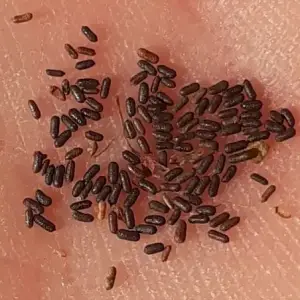
St John's Wort seeds from Hypericum perforatum are very fine, brown, and shaped like small cylindrical rods. They measure only one to two millimeters in length and weigh just a few centigrams.
This "fairy herb" grows in all types of soil; however, the substrate should be well-draining and, if possible, rich in organic matter.
It must be grown in full sun to benefit from beautiful flowering. If the plant lacks light, it will produce significantly fewer flowers.
This carpeting plant is very hardy. The ideal growth temperature is between 15 and 25°C. It is frost-resistant and grows back year after year. Its USDA hardiness zone is 5b.
As a robust plant, St John's Wort does not need frequent watering. Only one watering per week is recommended for ground cultivation, and two waterings per week for container cultivation during the summer. In winter, irrigation is not necessary.
The only effective way to reproduce this plant is by sowing its seeds; stem cuttings are unfortunately not possible.
St John's Wort is not particularly sensitive to diseases or pests. Its only real concern is rust (fungal disease), which can be treated with Bordeaux mixture.
At the end of the year, prune the plant back to ground level, immediately after harvesting its seeds and leaves.
Your review appreciation cannot be sent
Report comment
Report sent
Your report cannot be sent
Write your review
Review sent
Your review cannot be sent

check_circle
check_circle


