


Reference: 1232


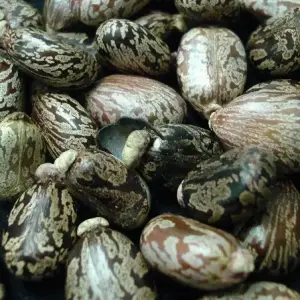

Castor Bean, also known as Palm of Christ or Ricinus communis in Latin, is a fast-growing herbaceous plant in the Euphorbiaceae family. Originally from Africa, this tropical variety typically reaches 2 meters in height. While it is a perennial in warm climates, it is often grown as an annual elsewhere.
Its lush foliage consists of large, palmate leaves (30 cm long) with 5 to 9 pointed, serrated lobes, appearing in shades of bright green or deep purple with red veins.
The flowers look like small red and yellow pom-poms (2 to 3 cm in diameter) that grow in clusters starting in late June.
The fruit is a spiny round capsule that turns from green to red and finally brown when ripe. The Castor seeds are incredibly beautiful—smooth, light brown with dark brown streaks—measuring 2 to 3 cm and resembling a tick (the name Ricinus actually means "tick" in Latin).
It thrives in loose, well-draining soil rich in organic matter. For pot culture, ensure the bottom is layered with clay pebbles for drainage.
The Castor plant requires full sun. Bright light is essential for it to develop its signature large leaves and vibrant colors.
Being a tropical plant, it thrives in temperatures between 27°C and 35°C. It stops growing if temperatures drop significantly. It is not frost-hardy (USDA zones 8b-11) and will die if temperatures drop below 0°C.
Water at the base during the first two weeks after planting. Once well-established, the plant becomes very drought-tolerant and rarely needs additional watering.
The Castor plant reproduces exclusively by seeds.
Outdoor plants are rarely affected by pests or diseases due to their toxicity. However, in a greenhouse, they can be targeted by red spider mites or whiteflies.
At the end of October, cut back the dry stems and harvest the seeds for the following year.
Your review appreciation cannot be sent
Report comment
Report sent
Your report cannot be sent
Write your review
Review sent
Your review cannot be sent

check_circle
check_circle


