All best sellers
borage
  • borage
  • Starflower
  • borage seeds
  • borago officinalis

Borago officinalis BORAGE (15 seeds)

0208

BORAGE seeds

€3.10
VAT included
Quantity
available now!
75 Items

Description

Borage, also known Borago officinalis in Latin, is a fast-growing annual herbaceous plant measuring 50 to 80 cm in height. It belongs to the Boraginaceae family.

Its leaves are broad, rough, and deep green. They have a hairy texture due to fine bristles covering their surface.

It blooms from June to September. The flowers are star-shaped and a brilliant blue, consisting of five petals. They are highly attractive to pollinators.

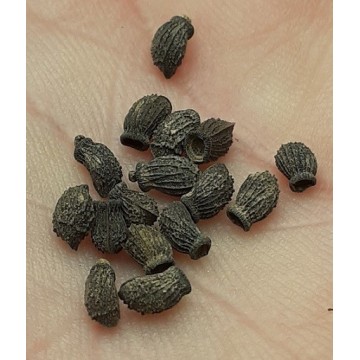
Borage seeds are black, elongated, and rough. They measure an average of 5 millimeters in length.

- Uses:

Borage is a precious plant in cooking and culinary decoration for its unique flavor reminiscent of cucumber.

Its intense azure blue flowers are edible and are often used to garnish salads, soups, or desserts, bringing an aesthetic and refreshing touch.

Young leaves can also be consumed cooked like spinach or used to flavor summer drinks.

Borage is primarily exploited for the oil extracted from its seeds. This oil is exceptionally rich in gamma-linolenic acid, an essential fatty fatty acid renowned for its skin-moisturizing properties.

In the garden, borage is a major ecological ally for farmers and gardeners. It is an exceptional honey-producing plant that attracts many pollinators, such as bees and bumblebees, thus promoting biodiversity and fruit production nearby.

In addition, its ability to repel certain harmful insects, notably slugs and cabbage worms, makes it an ideal companion plant to naturally protect vegetable gardens.

- Germination and Sowing:

  • The ideal period to sow borage begins in May.
  • Prepare small 5 cm pots and fill them with high-quality horticultural seed-starting compost.
  • Bury the seeds horizontally at a depth of 5 millimeters.
  • Lightly press down the substrate.
  • Water the culture using a spray bottle.
  • Place the pots in a greenhouse at a temperature of at least 20°C.
  • Germination generally begins 7 to 10 days after sowing.

- Soil Type:

It prefers cool, well-drained soils rich in organic matter. A slightly alkaline soil is ideal, though it can adapt to neutral soils.

- Exposure and Light:

This edible-flowered plant loves bright light. It can tolerate light shade, but full sun exposure promotes better growth and flowering.

- Temperature and Hardiness:

It grows very well when temperatures are between 15°C and 25°C. It is cold-resistant and can tolerate temperatures down to -5°C. Its USDA hardiness zone is 4b.

- Watering and Irrigation:

Watering must be regular, especially during dry summer periods. Water thoroughly at the base of the plant.

- Propagation:

Cuttings: Stem cuttings can be taken during the summer.

- Pests and Diseases:

Diseases: It is sensitive to powdery mildew, a fungal disease that develops when there is too much humidity in the air; the main symptom is the whitening of the leaves.

Pests: The main pests are aphids, as well as slugs and snails that devour young seedlings and leaves.

Comments (1)
Grade
No customer reviews for the moment.

16 other products in the same category:

Customers who bought this product also bought: