€3.99
Reference: 1232


Paddy's lucerne, also known as Mahabala or Rhomboid-leaved Sida, is a perennial plant belonging to the Malvaceae family. This herb, also referred to as Arrowhead, is native to tropical and subtropical regions. It is a small shrub reaching about 80 cm in height, making it ideal for small growing spaces.
Its leaves are oval and arrowhead-shaped. They have a soft texture, with a smooth to slightly hairy surface, and a medium to dark green color.
The flowers of Sida rhombifolia are small and yellow, grouped in inflorescences. They have a simple structure with five petals and a discreet calyx. Flowering occurs throughout the year in tropical and subtropical climates.
The fruit is a small, star-shaped capsule, often brown or black at maturity. When ripe, it splits open to release the small seeds.
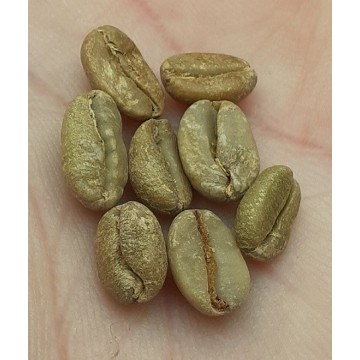
Mahabala seeds from the Sida rhombifolia are brown and angular, featuring two small hooks that allow for seed dispersal by animals.
It prefers a well-draining substrate rich in organic matter. It adapts to various soil types but develops best in light, rather sandy, or loamy soil.
It should be grown in full sun to partial shade. It tolerates high light intensity, which promotes growth and vigor.
Arrowleaf Sida enjoys warm temperatures between 20°C and 30°C. It is sensitive to cold and does not tolerate frost. In cooler climates, it is recommended to grow it in a pot.
Water needs are moderate; allow the top layer of soil to dry out between waterings. During hot or dry periods, slightly increase the frequency of irrigation, but avoid excess water to prevent root rot.
Reproduction is mainly done through seeds or cuttings. Semi-hardwood stem cuttings are also possible during the summer to obtain new plants.
The main pests that can affect it are aphids, mealybugs, and sometimes spider mites. It is advisable to monitor the plant regularly and intervene quickly with appropriate treatments.
Requires no special maintenance; a very simple plant to grow.
Your review appreciation cannot be sent
Report comment
Report sent
Your report cannot be sent
Write your review
Review sent
Your review cannot be sent

check_circle
check_circle