


Reference: 1232


Guava tree, or Psidium guajava, is a fruit tree belonging to the Myrtaceae family. Native to the tropical regions of North and Central America, it is a relatively slow-growing evergreen tree that typically reaches a height of 3 to 6 meters.
Its leaves are opposite, simple, and oval-shaped, measuring about 5 to 15 cm long. They feature a smooth, glossy texture dark green on top and lighter underneath and release a pleasant fragrance when crushed.
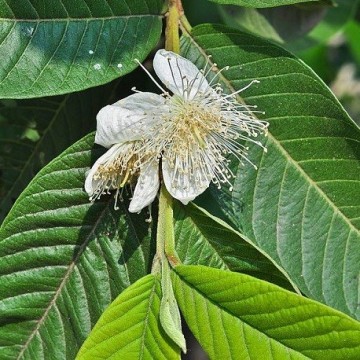
The flowers are large (2 to 5 cm in diameter) and solitary or in small clusters, consisting of five white or slightly pink petals with numerous decorative stamens. Flowering occurs in spring and summer.
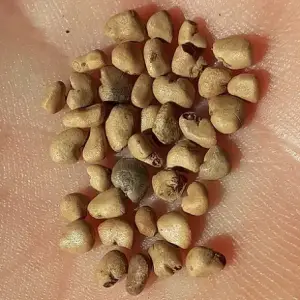
The fruits are slightly oval berries, 4 to 10 cm in diameter, with green skin that softens as it matures. Inside, the juicy pink flesh is dotted with small, light brown, slightly rough seeds measuring about 3 mm in diameter.
Guava tree prefers well-drained soil rich in humus and organic matter. A mix of potting soil, compost, and a bit of sand is suitable. The substrate should be slightly acidic (pH between 5.5 and 7).
The tree requires significant light and should be planted in full sun. A minimum of 6 hours of direct sunlight per day is ideal for growth, flowering, and fruit production.
It thrives in warm temperatures, ideally between 20°C and 30°C. While it can tolerate slightly lower temperatures for very short periods, it will not survive below 5°C. It must be protected, brought indoors during winter, or planted in mild climates.
Watering must be regular, especially during the growing periods in spring and summer while the tree is young. The soil should be kept moist but never waterlogged.
Guava can be propagated by seeds or by semi-hardwood cuttings placed in a light substrate.
Your review appreciation cannot be sent
Report comment
Report sent
Your report cannot be sent
Write your review
Review sent
Your review cannot be sent

check_circle
check_circle


