


Reference: 1232



Pachycereus pecten-aboriginum, also known as Indian Comb, is a cactus from the Cactaceae family. This cactus is found in Mexico, North America. Its growth is relatively fast, reaching 4 to 6 meters in height in its native country.
Its stems are cylindrical, erect, and can reach several meters in height. Grayish-green to olive-green in color, they feature a branched structure shaped like a candelabra. Each stem is marked by 10 to 12 prominent longitudinal ribs, bordered by areoles bearing robust gray or whitish spines. Flowering occurs on the upper part of the stems.
The flowers are shaped like wide funnels, measuring 7 to 10 centimeters long. They display petals of pure white or slightly cream on the inside, while the outside is often tinged with brown or purple. These flowers are nocturnal, opening at nightfall to be pollinated by bats.
The fruit is the most characteristic feature of this species. It is a round berry measuring 6 to 7 centimeters in diameter, entirely covered in a dense sheath of flexible, tightly packed spines.
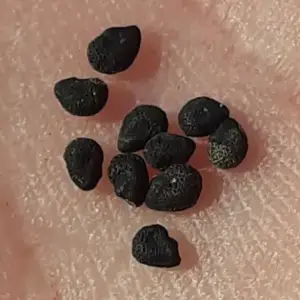
Upon maturity, the fruit becomes dry and splits open, revealing a fleshy red pulp. Inside the pulp are numerous small, shiny black seeds. They are relatively large for a cactus, ovoid in shape, and have a smooth surface.
This cactus requires an exclusively mineral and extremely well-draining substrate to avoid any water retention around the roots. A special cactus mix, composed of one-third garden soil, one-third coarse sand, and one-third gravel or pumice, is ideal. It tolerates poor and rocky soils well but dislikes clay-heavy or compact earth.
The Indian Comb requires full sun exposure. Maximum light is essential to ensure vigorous growth and to allow for flowering. Indoors or in a greenhouse, it must be placed behind a very well-exposed glass pane. A lack of light can cause etiolation, making the main stem thin, pale, and fragile.
Native to the desert zones of Mexico, it thrives in high heat. Its hardiness is limited: it can withstand short periods of cold around -2°C, provided the soil is perfectly dry. It is best to over-winter it in a dry, frost-free location between 5°C and 10°C.
Its water requirement is very low. During the growing season, a thorough watering every two to three weeks is sufficient, allowing the substrate to dry out completely between waterings. In autumn and winter, watering must be stopped entirely.
Propagation is mainly done by seed. Stem cuttings are also possible: a section must be cut, and the wound left to callous in the open air for several weeks until a complete callus forms, then placed on a draining mix without watering until the first roots appear.
Its main enemy is excess moisture, which causes irreversible fungal rot at the collar or roots. Regarding parasites, it can be targeted by mealybugs, which often lodge themselves between the ribs.
Your review appreciation cannot be sent
Report comment
Report sent
Your report cannot be sent
Write your review
Review sent
Your review cannot be sent

check_circle
check_circle


