


Reference: 1232


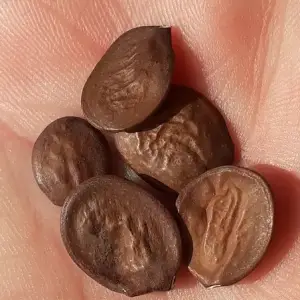


Orchid Tree or camel's foot tree is a small tree belonging to the Fabaceae family.
This ornamental plant is native to Southern China and Southeast Asia. It is a slow-growing exotic species with deciduous foliage.
A perennial plant, it can reach a height of 3 to 4 meters, featuring a spreading and slightly rounded habit.
The Orchid Tree is so named because its flowers closely resemble those of an orchid. They are highly fragrant and pink in color, variegated with purple—a true wonder.
Orchid Tree seeds come from Bauhinia purpurea; they are rounded, flattened, light brown in color, and measure an average of one centimeter in diameter.
Its green, slightly bluish, and deciduous foliage consists of thick, two-lobed, heart-shaped leaves.
The fruits are flattened pods measuring 20 cm in length by 2 cm in width, containing leathery valves where the seeds are housed.
- Uses:
The Orchid Tree: An Architectural and Floral Marvel
Sowing the reproducible and untreated seeds from Ethnoplants allows you to bring life to the Bauhinia, one of the most spectacular species of tropical flora.
Prized in landscaping for its elegant habit and its unique bilobed foliage evoking butterfly wings, this tree offers a sumptuous flowering that resembles that of orchids.
By germinating your own specimens, you introduce a refined source of shade and a centerpiece for the aesthetic enhancement of your winter gardens or your outdoor spaces in mild climates.
A Culinary and Craft Treasure
Thanks to the vigour of the plants, you gain access to a botanical resource with multiple and sustainable applications.
Beyond its ornamental appeal, this tree is a pillar of local gastronomy in Asia, where its flower buds are cooked as nutritious and flavorful vegetables.
On a craft level, its wood, both light and robust, is traditionally used for making tools and small carpentry items, illustrating a perfect synergy between humans and plant biodiversity.
It requires slightly acidic soil rich in organic matter. The substrate must be aerated and well-draining.
This tropical shrub requires a full sun exposure to flower properly. It can tolerate partial shade, but the number of flowers and the growth rate will be reduced.
The Bauhinia grows very well when temperatures range from 23°C to 35°C. Below this range, this beautiful but tender plant stops growing. Its hardiness is low; it can only withstand very light frosts. It is therefore recommended to bring the plant indoors during the winter. Its USDA hardiness zone is 9.
It has high water requirements. It should be watered at the base twice a week if grown in a pot, and twice a month when grown in the ground.
Cuttings: It can also be propagated by "smothered" (airtight) stem cuttings. To do this, cut 15 cm long branches in August, plant them in a pot with soil and sand, and leave them in a greenhouse at 30°C.
It is occasionally attacked by mealybugs and aphids. The foliage is sometimes subject to fungal attacks from powdery mildew.
This article was written by Julien on 07/09/2026.
Your review appreciation cannot be sent
Report comment
Report sent
Your report cannot be sent
Write your review
Review sent
Your review cannot be sent

check_circle
check_circle


