


Reference: 1232



Tulip Tree, also known as yellow poplar is a large, fast-growing tree belonging to the Magnoliaceae family. This atypical deciduous plant is native to the southern and eastern United States. In Europe, it typically reaches heights of 20 to 30 meters at maturity. In its natural habitat, it can live for over 300 years.
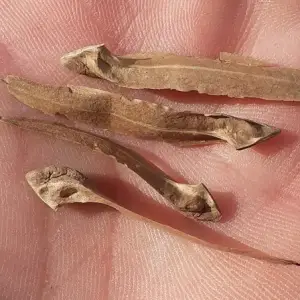
Tulip Tree seeds from Liriodendron tulipifera are found in woody capsules that ripen in late summer. Each capsule contains several small, light-brown winged seeds, shaped like hang gliders and measuring 3 to 4 centimeters in length, which facilitates wind dispersal.
Its large leaves are shaped like a duck's foot or a five-lobed star with slightly wavy edges. They are bright green in summer, turning yellow in autumn, and are arranged alternately along the branches.
Flowering occurs in spring from May to June. The flowers are remarkable for their tulip-like shape, featuring a yellow-orange color with green-yellow spots inside. The flowers, leaves, and wood all possess a very characteristic scent.
A Majestic Giant
The Tulip Tree is a majestic tree famous for its spectacular green and orange tulip-shaped flowers.
Introduced to Europe in the 17th century, this fascinating giant offers a grand spectacle in autumn when its ornamental foliage turns a vibrant golden yellow.
The Green Gold of Master Craftsmen
Often called "yellow poplar" in North America, its soft, lightweight, and easy-to-work wood is highly prized for making mouldings and musical instruments.
Sowing our tulip tree seeds from Ethnoplants allows you to grow a noble material renowned for its high stability and natural resistance to warping.
A Historical Legacy for Large Spaces
Once used by Native American tribes to carve single-piece dugout canoes, this vigorous tree thrives ideally in deep, moist soils.
Its lofty habit and rapid growth make it an exceptional shade tree to sustainably structure large gardens and landscaped parks.
Liriodendron tulipifera prefers rich, deep, and well-drained soil. It also tolerates clay-heavy or sandy soils.
This tree thrives in full sun for optimal growth. It can tolerate partial shade, though its growth rate will be significantly slower.
Native to North America, it is hardy down to -20°C. It easily withstands temperate to cold climates.
It requires regular watering, especially during its first few years of growth. Once established, it can tolerate some drought but prefers soil that remains consistently cool and moist during the summer.
Reproduction is mainly achieved through seeds. Multiplication by cuttings is extremely difficult, though technically possible.
This article was written by Julien on 07/15/2026.
Your review appreciation cannot be sent
Report comment
Report sent
Your report cannot be sent
Write your review
Review sent
Your review cannot be sent
Reference: 1197
Reference: 0118

check_circle
check_circle


