


Reference: 1232



Juneberry, Serviceberry also known by its Latin name Amelanchier canadensis, is a shrub native to Canada. It belongs to the Rosaceae family. It is a deciduous, fast-growing shrub that can reach 4 to 5 meters in height.
It produces white flowers with five long, thin petals. These later give way to pea-sized berries that are dark purple to black, very sweet, and fruity. Highly decorative, its flowers are a garden highlight during April and May.
In autumn, the foliage turns vibrant shades of red and orange, giving it a remarkable luminosity.
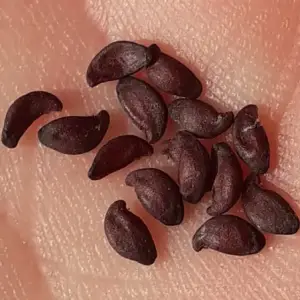
Serviceberry seeds are black, elongated, and measure 5 millimeters in length. They possess a small hook characteristic of the variety.
The Juneberry: A Shrub with Sweet "Little Pears"
The acquisition of fresh and reproducible seeds from Ethnoplants allows you to sow and then harvest the juneberry, a juicy berry whose unique flavor evokes a subtle blend of blueberry and almond.
These fruits, which resemble blueberries in appearance, can be enjoyed both freshly picked and in artisanal jams, offering a wild and refined culinary resource for your homemade pies or natural syrups.
A Chromatic Spectacle for Landscaping
A true chameleon of the garden, this shrub offers permanent visual interest: a misty white flowering in spring and flamboyant foliage, turning from orange to bright red, as early as autumn.
Its moderate size and great hardiness make it an excellent choice for structuring bocage hedges or embellishing urban gardens, while promoting a natural and changing aesthetic.
A Pillar of Biodiversity and Ecological Resilience
Planting a juneberry shrub from your own seedlings actively contributes to supporting local wildlife, with the flowers serving as a pantry for pollinators while the berries delight birds in summer.
Used in the restoration of forest edges for its capacity to stabilize soils, the juneberry is a precious ally for environmental balance.
This Canadian shrub grows in soil rich in organic matter, using high-quality horticultural potting soil and compost. For pot or planter cultivation, ensure good drainage at the bottom with gravel or clay pebbles.
This small fruit tree needs to be watered at the base a few times a week during the summer to ensure good growth. this will result in spectacular flowering and an abundant fruit harvest. During the rest of the year, irrigation is not necessary.
Place the plant in full sun or partial shade. It is a shrub that loves bright light. For artificial lighting, prefer fluorescent tubes, MH bulbs, or horticultural LEDs.
It grows very well in temperatures ranging from 15°C to 30°C. This Canadian tree is very resistant to extreme cold, withstanding temperatures as low as -25°C. Its USDA hardiness zone is 4b.
There are two ways to multiply it: either by seed or by softwood cuttings (cuttings "under glass" or à l'étouffée) starting in June.
This North American shrub is spared by most parasites; it does not attract aphids or mites.
This article was written by Julien on 07/09/2026.
Your review appreciation cannot be sent
Report comment
Report sent
Your report cannot be sent
Write your review
Review sent
Your review cannot be sent

check_circle
check_circle


