


Reference: 1232


Tea tree or chinese tee is a hardy, slow-growing tree native to Asia and belongs to the Theaceae family.
It can reach 4 to 5 meters in height at maturity.
Its evergreen foliage is leathery, thick, smooth, and glossy.
Its thick flowers are white with a yellow center and begin to appear in early October.
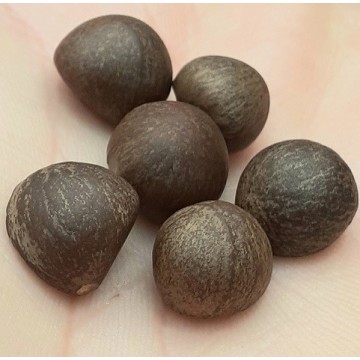
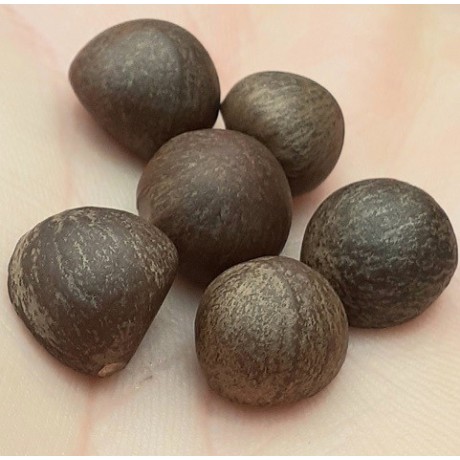
Tea seeds come from Camellia sinensis; they are large and round, measuring 1 centimeter in diameter.
They are brown with a small light-colored spot. Its fruits are green capsules that turn brown as they ripen, each containing one to four seeds.
The Tea Tree of Imperial Origin
According to a famous Chinese legend, Emperor Shennong discovered tea in 2737 BC when a wild Camellia sinensis leaf accidentally fell into his boiling water.
Sowing our collector's tea plant seeds allows you to welcome into your home this mythical shrub at the origin of all the world's teas.
A Treasure of Aromas and Terroirs
The aromatic richness of your harvests will depend on the selection of young buds and their drying or oxidation method to create green, black, or oolong tea.
This mild-climate plant thrives ideally in large containers or in sheltered open ground in mild-climate gardens.
An Ecological and Ornamental Cultivation
Beyond its obvious gustatory qualities, this evergreen shrub from the Camellia family offers highly aesthetic, fragrant white blooms in autumn.
Its careful cultivation is an excellent natural alternative to enrich the biodiversity of your winter garden or greenhouse.
You must use acidic pH soil; the plant will not tolerate any other type of soil.
I recommend choosing a very bright or partially sunny location. Full sun may turn the leaves red due to UV rays.
It will easily withstand significantly negative temperatures down to -15°C.
However, it fears extreme heatwaves.
The tree is water-intensive and requires plenty of watering during the summer period.
I recommend mulching the base with pine bark.
There are two methods for propagation: you can reproduce it either by sowing seeds or by taking stem cuttings during the summer.
This article was written by Julien on 07/15/2026.
Your review appreciation cannot be sent
Report comment
Report sent
Your report cannot be sent
Write your review
Review sent
Your review cannot be sent
check_circle
check_circle


