


€3.99
Reference: 1232


Almond tree, or Prunus dulcis, is a small Mediterranean tree belonging to the Rosaceae family. It typically reaches a height of 3 to 5 meters and has a relatively slow growth rate. While it usually lives between 20 and 30 years, some specimens can reach up to 50 years with optimal care.
Its foliage is elegant, featuring bright green, oval-to-lanceolate leaves measuring 8 to 15 cm in length with a slightly rough texture. In autumn, the leaves turn golden before falling.
The flowering is a spectacular event that heralds spring; appearing between February and April, the delicate, fragrant flowers range from pale pink to white and attract many pollinators. The flowers appear before the leaves.
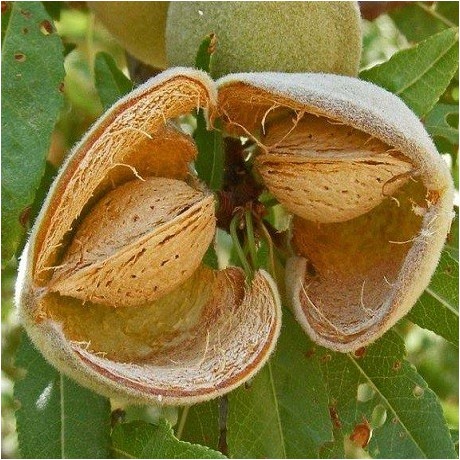
The fruits, commonly known as almonds, are oblong drupes covered by a green, velvety outer hull. At maturity, this hull splits to reveal the edible seed.
Nutrition: The Benefits of Oilseeds in Cooking
The almond is a food prized for its high richness.
Whether consumed raw, roasted, or as a plant-based milk, it constitutes a top-tier nutritional alternative to enrich your snacks or fine pastries such as frangipane.
Gastronomy and Confectionery: The Versatility of the Almond
From the famous sugared almond to artisanal pralines, this dried fruit is the pillar of traditional global pastry.
Its transformation into powder or paste allows for varied gourmet creations, while its use as an aperitif highlights its unique capacity to adapt to all modern consumption habits.
This small tree thrives in well-drained, light soil rich in organic matter and minerals. A slightly acidic pH is ideal. Avoid heavy clay soils that retain water, as this can cause root issues.
Like many Mediterranean plants, it requires full sun. A sunny location encourages healthy flowering and fruit development. It is recommended to plant it in a spot protected from cold winds to prevent frost damage.
Almond tree is sensitive to frost, especially during its flowering stage. While adapted to Mediterranean climates, it can resist temperatures down to -10°C for short periods.
Watering should be regular, especially during planting, dry spells, or when the fruit is developing. However, avoid excess water; moderate and well-distributed irrigation is essential to prevent disease.
Reproduction is primarily done through seeds or grafting. Grafting is widely used to reproduce specific varieties and ensure fruit quality.
It can be affected by pests such as aphids, scale insects, and mites. Fungal diseases like monilia (brown rot) and powdery mildew can also pose problems. Regular monitoring and preventive treatments are advised.
This article was written by Julien on 07/09/2026.
Your review appreciation cannot be sent
Report comment
Report sent
Your report cannot be sent
Write your review
Review sent
Your review cannot be sent
check_circle
check_circle


