


Reference: 1232


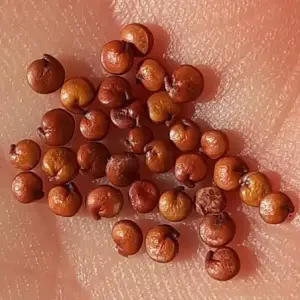

Red Quinoa, also known as chisaya mama or kinwa, is an annual plant from the Amaranthaceae family. It is native to South America, primarily Peru and Bolivia. Quinoa averages 80 cm in height, though this can vary depending on the variety and growth conditions. Harvest typically occurs 90 to 120 days after planting. The plant is often harvested when the inflorescences become dry.
Its leaves are oval or slightly heart-shaped, sometimes with wavy edges. They are medium-sized, ranging from pale green to a darker green, and have a soft or slightly hairy texture. They are arranged alternately along the stem.
The flowers are small, discreet, and grouped in dense panicles located at the top of the plant. They are generally pale green to creamy white, sometimes with pinkish or greenish nuances. The flowering period is short but abundant.
Red quinoa seeds are round, hard, red in color, and small, measuring only between 1 and 2 millimeters in diameter. They are rich in nutrients and constitute the edible part of the plant, often called "quinoa grains." Upon maturity, they detach easily and can be harvested for consumption.
The Sacred Heritage of Ancient Civilizations
Cultivated for over 6,000 years, quinoa was at the heart of the diet of pre-Columbian civilizations.
Known by the Incas as chisaya mama, or "the mother of all grains", this variety was considered sacred.
Today, growing quinoa means reconnecting with a rich history and a plant that has survived for centuries thanks to its exceptional resilience.
Culinary Versatility and Flavor
Beyond its history, Amerindian quinoa is a highly versatile culinary ingredient.
Eaten as a grain, it elevates summer salads and nourishing soups, while its flour obtained by grinding the seeds is perfect for making delicious pancakes and energizing porridges for your breakfasts.
A Major Asset for the Garden
In agriculture, this plant is particularly prized for its robustness.
It stands out for its remarkable drought resistance and its ability to thrive in poor soils where other crops might struggle to grow.
It is the ideal choice for gardeners wishing to combine ancient tradition with easy cultivation in the vegetable patch.
Red quinoa prefers light, well-drained soil. It thrives in sandy or loamy soils with a pH between 6 and 8. It tolerates poor soils, but fertilization improves growth.
It requires full sun exposure for optimal growth. It should receive at least 6 to 8 hours of sunlight per day to ensure proper grain maturation.
This Native American plant prefers temperatures between 15 and 25°C. It can tolerate higher temperatures, but intense heat can slow its growth. Unfortunately, it does not withstand freezing temperatures.
Moderate watering is recommended at the time of planting. It likes moist soil without being waterlogged, especially during the growth period.
The main pests of red quinoa are aphids, which can transmit diseases, and caterpillars that can devour the leaves. Slugs can also cause damage.
This article was written by Julien on 07/14/2026.
Your review appreciation cannot be sent
Report comment
Report sent
Your report cannot be sent
Write your review
Review sent
Your review cannot be sent
Reference: 1177

check_circle
check_circle


