


Reference: 1232



Camphor also called ravintsara or Cinnamomum camphora in Latin, is an exotic, highly aromatic, and fast-growing tree that can reach 3 to 4 meters in height. It is native to Asia, specifically China and Indonesia. It belongs to the Lauraceae family.
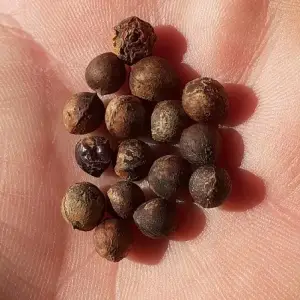
Camphor seeds are round and brown in color. They are very fragrant and very hard. They are naturally dispersed by birds and other animals that consume them.
The flowers are white and fragrant, arranged in clusters. They are small, measuring about 5 millimeters in diameter. Flowering takes place in spring and early summer.
Its fruits are spherical berries, blue or black depending on maturity, measuring about 1 cm in diameter. The pulp is highly fragrant.
This fragrant tree prefers soil rich in organic matter, even clay-like, provided it is well-drained and slightly acidic.
It needs a full sun or slightly shaded exposure. It flowers better with good light.
Due to its exotic origin, it loves heat and grows rapidly in mild temperatures ranging from 18 to 30°C. It can resist cold, but not temperatures below -5°C.
The tree needs regular watering, especially during dry periods. The soil should remain slightly moist. It is important to let the soil dry out slightly between waterings.
Your review appreciation cannot be sent
Report comment
Report sent
Your report cannot be sent
Write your review
Review sent
Your review cannot be sent

check_circle
check_circle


