


- Out-of-Stock

Reference: 1232


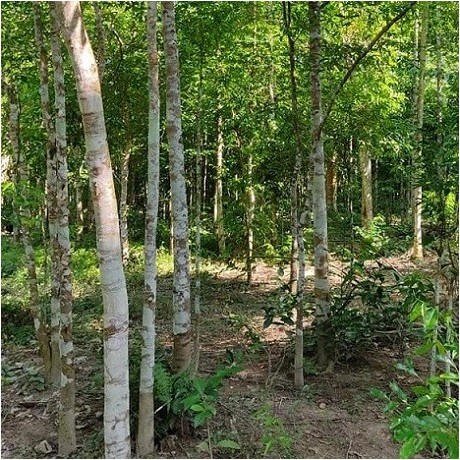
Agarwood, aloeswood also known as Calambac, eaglewood, is a slow-growing tropical plant from the Thymelaeaceae family. It is a large tree native to the tropical forests of Southeast Asia that can reach a height of 10 meters. Aquilaria crassna signifies "perfume wood" due to the scent it emits.
Its leaves are simple and alternate, generally measuring between 8 and 15 centimeters in length. They have an elliptical to oblong shape, with smooth edges and a slightly leathery texture. Their color varies from dark green to olive green, and the surface is often glossy. The leaves are arranged to maximize sun exposure, thus promoting photosynthesis in the shaded environments where the tree often grows.
The flowers are small and discreet, generally grouped in inflorescences. They are cream to yellowish in color and have a tubular shape. Each flower is surrounded by bracts, making them more visible amidst the dense foliage. Flowering takes place during the wet season.
Its fruits are woody capsules, measuring about 2 to 4 centimeters in length. At maturity, these capsules open to release winged seeds, facilitating their dispersal by the wind. The fruits are generally brownish in color with a rough texture. They appear a few months after flowering and are often visible during the dry season.
Agarwood seeds are rounded with a point, brown in color, and possess a very distinctive black "tail."
This tree prefers a draining, light substrate rich in organic matter to develop well. A mix of potting soil, sand, and compost is ideal to encourage good rooting and prevent water stagnation. A slightly acidic pH is also recommended.
This tropical species needs a slightly shaded exposure to thrive properly. A location with direct sunlight during part of the day promotes healthy growth, but it is essential to avoid excessive sunburn, especially in very hot regions.
Perfume wood is sensitive to extreme temperatures. It prefers warm conditions, with ideal temperatures between 20 and 30°C. Temperatures below 15°C can hinder its growth, while excessively high temperatures without adequate humidity can also be stressful. It is a frost-sensitive plant that will not survive the winter cold.
Watering must be regular but moderate. It is important to keep the soil slightly moist without saturating it. Overwatering can lead to root rot, while soil that is too dry can stress the plant. During active growth periods, watering every two days is advised, while during dormancy, it can be reduced to once every 15 days.
It reproduces primarily sexually through its seeds but can also be propagated by woody stem cuttings.
Aquilaria crassna is exposed to various pests such as caterpillars and aphids, which damage leaves and young shoots. It is also vulnerable to fungal and bacterial diseases, such as dieback caused by Phytophthora, which causes leaf spots and yellowing.
Your review appreciation cannot be sent
Report comment
Report sent
Your report cannot be sent
Write your review
Review sent
Your review cannot be sent
Reference: 1241
Reference: 0118
check_circle
check_circle


