


Reference: 1232


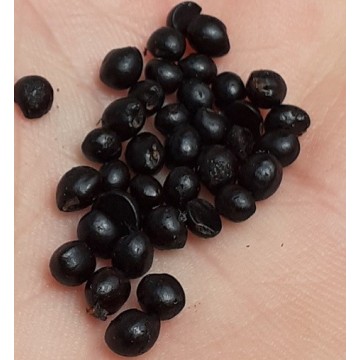

JAPANESE PEPPER seeds
Sichuan pepper is a shrub from the Rutaceae family. It is a deciduous shrub that measures 3 to 4 meters in height and originates from Asia, specifically the Sichuan region of China.
Nowadays, it is naturalized in France and grows very easily in our latitudes.
The fruits of the Japanese pepper are small, globular capsules, generally red to brown in color, which are highly fragrant and contain black seeds.
They measure approximately 5 to 10 mm in diameter. It is a very aromatic Asian spice derived from the husk of the fruit. Its leaves are prickly, compound, and alternate, with a shiny, dark green appearance.
They are generally pinnate, consisting of several leaflets that are oval and serrated on the edges.
The leaves release a pleasant fragrance when crushed.
Their size varies, but they generally measure between 5 and 15 cm in length.
Its flowers are small and grouped in inflorescences. They are yellow-green or cream-colored and star-shaped.
The flowers appear in clusters and are unisexual, with both male and female flowers on the same tree. Flowering takes place in spring, between April and June.
Sichuan pepper seeds come from Zanthoxylum piperitum; they are black, round, and very shiny.
They measure 5 millimeters in diameter.
It grows very well in an aerated substrate rich in organic matter.
Remember to provide compost once a year in the spring and ensure the bottom of the pot is well-drained with clay pebbles or medium-sized gravel.
Opt for a sunny but not scorching exposure, or even a semi-shaded spot, to benefit from an abundant production of husks starting in October.
It grows very well when temperatures range from 15 to 25 °C. Its hardiness is high, as it resists significantly negative temperatures down to -25 °C without any problem.
It does not need protection, even during the first few years.
It does not require much water; it is simply important to water it at the time of planting and then twice a week for the first two months.
Once the root system is well-established, it no longer requires watering.
There are two ways to propagate it: by sowing seeds or by taking stem cuttings mid-season using ripened (hardened) wood.
It is a variety highly resistant to pests and diseases, thanks to its thorns and strong scent.
Pruning is not mandatory. It takes place in winter to remove dead or poorly oriented branches.
Note that the fruits appear on the previous year's wood; do not prune too severely.
A Sensory Explosion
Growing Sichuan pepper from Ethnoplants' hand-harvested fresh seeds yields a vigorous shrub; its berries offer a complex flavor profile, blending woody warmth with citrus notes.
Highly prized in gastronomy, this Asian pepper creates a unique tingling sensation on the palate, enhancing everything from chocolate to premium cuts of meat with remarkable originality.
Productivity and Culinary Uses
By the third year, the berry harvest becomes abundant, offering a fresh spice with an aromatic power superior to store-bought dried versions.
Your seedlings guarantee vigorous growth, allowing you to quickly incorporate these fragrant husks into your stews or refined dishes for a unique flavor profile.
A Defensive and Ornamental Hedge
Thanks to its sharp thorns, this shrub is an ideal choice for creating an impenetrable defensive hedge while adorning your garden with elegant foliage.
It is a robust option that combines a natural protective function with undeniable ornamental appeal throughout the season.
This article was written by Julien on 09/25/2026.
Your review appreciation cannot be sent
Report comment
Report sent
Your report cannot be sent
Write your review
Review sent
Your review cannot be sent

check_circle
check_circle


