- Out-of-Stock

Reference: 1232


Kanna is a small creeping succulent plant measuring 20 to 30 cm in length, native to Africa.
It is a slow-growing perennial that belongs to the Aizoaceae family.
Its leaves are thick, fleshy, and oblong in shape. They are arranged in opposite pairs along the stems, and their color varies from light green to dark green. The leaves have a waxy texture and smooth edges.
The flowers of Sceletium tortuosum are discreet and usually appear at the tips of the stems. They are small and white or pale yellow, with tube-shaped petals that bloom into a star shape. Flowering takes place during the summer months.
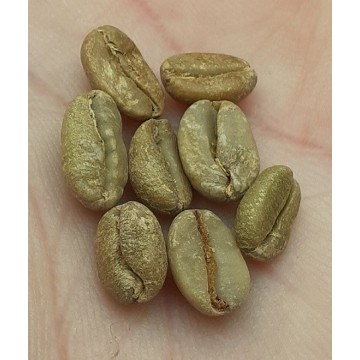
Kanna seeds from Sceletium tortuosum are tiny; they are very easy to sow on a fine substrate without burying them, under a warm greenhouse.
A Heritage from Southern Africa
Native to the arid regions of South Africa, this succulent has intrigued botanists for centuries with its ability to survive in hostile environments.
It is among the fascinating species collected for their extraordinary resilience and spectacular adaptation to drought.
The Art of Desert Compositions
Highly appreciated by xerophyte enthusiasts, it uniquely structures interior decors and temperate greenhouses.
Its creeping stems and small fleshy leaves blend perfectly with cacti to create unique miniature landscapes.
Simple and Decorative Cultivation
This collector's plant requires little maintenance, needing a very well-drained substrate and maximum sunlight to thrive.
Offered exclusively for ornamentation, it appeals to botanical enthusiasts keen to enrich their catalog of plant rarities.
Sceletium tortuosum requires a very mineral substrate that is also rich in organic matter. A mixture of 70% sand and 30% fine potting soil is perfectly suitable. Remember to drain the bottom of the pot with clay pebbles.
Creeping Kanna requires little watering. In the height of summer, water it every three days. In winter, once a week will be more than enough. Never allow water to stagnate in the saucers, as the risk of root rot is frequent for this type of plant.
Kanna requires a lot of bright light; you must find it a sunny spot. A south-facing exposure is ideal in winter, while in summer, a slightly shaded exposure is preferred for faster development. Regarding artificial lighting for indoor cultivation, neon lights or MH (Metal Halide) lamps are preferred.
This small ethnobotanical plant grows very well when the temperature varies between 22 and 45°C. Due to its low hardiness, it can tolerate winter temperatures of 5°C in a very dry environment. It is frost-sensitive and must be brought indoors during the winter period.
There are two effective ways to reproduce Kanna: either by sowing its seeds or by taking stem cuttings and rooting them in a humid, confined environment.
This article was written by Julien on 07/25/2026.
Your review appreciation cannot be sent
Report comment
Report sent
Your report cannot be sent
Write your review
Review sent
Your review cannot be sent
Reference: 0093
Reference: 0091
Reference: 1197

check_circle
check_circle