


€3.99
Reference: 1232


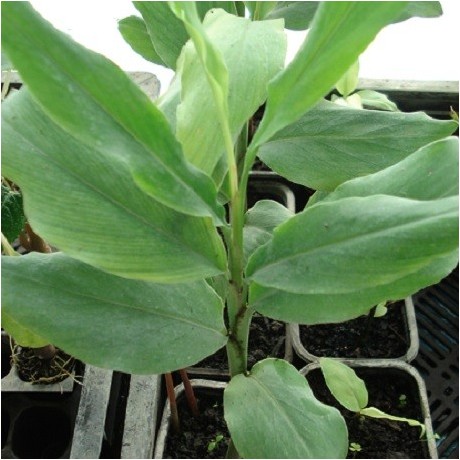
Shell Ginger or Alpinia zerumbet in Latin, belongs to the Zingiberaceae family.
It is a tropical, perennial, rhizomatous herbaceous plant native to East Asia.
At maturity, it stands about 70 cm tall.
Its foliage is highly aromatic with a scent close to cinnamon, which is why it is also nicknamed "Cinnamon Ginger."
The leaves measure 30 to 40 cm in length and are lance-shaped, simple, upright, and very glossy.
The flowering of the Alpinia zerumbet begins late in the year.
Its sweet-scented flowers grow in drooping clusters and feature shades of yellow, white, and pink.
Shell Ginger seeds are round and black, measuring 5 millimeters in diameter, and are surrounded by white flesh.
A Wonder of Tropical Ethnobotany
Alpinia zerumbet, is an iconic plant of tropical gardens, fascinating for its cultural heritage and vegetal architecture.
Beyond its historical role in botanical traditions, this species is cultivated at Ethnoplants as an essential collector's piece for any gardener wishing to bring a touch of exotic authenticity to their green space.
A Sensory Festival: Foliage and Flowering
This plant offers a complete sensory experience: its evergreen leaves, when crushed, reveal a subtle, spicy fragrance reminiscent of cinnamon and ginger.
During its flowering period, it adorns itself with spectacular cascading clusters of delicate colours and graphic elegance.
It is a major landscaping asset for structuring your flowerbeds, conservatories, or winter gardens with a strong and refined vegetal presence.
Cultivation and Strictly Ornamental Use
Ideal for mild climates outdoors or container cultivation in cooler regions, this variety brings an immediate tropical signature.
For safety reasons, this specimen is intended exclusively for ornamentation, botanical observation, and aromatic use of the foliage (ambient fragrance).
It grows in soil rich in organic matter. The substrate must be light, well-aerated, and above all, well-draining.
This aromatic rhizome plant needs plenty of bright light. It should be placed in a sunny or slightly shaded location to thrive.
It enjoys frequent watering but does not like "wet feet." It is necessary to water it at least 3 times a week during the height of summer, making sure that no stagnant water remains in the pot's saucer.
Its exotic origin allows it to grow very well in temperatures ranging from 25°C to 35°C. Below 15°C, the plant stops developing.
This variety is not very hardy; the base freezes at 0°C and the plant dies. It is therefore imperative to bring it indoors before the winter period.
Atoumo can be multiplied by dividing its rhizomes, which is the simplest and fastest way to reproduce it.
Sowing seeds is also possible starting in late spring.
This plant is very resistant to diseases. It is rarely attacked by pests, with the exception of spider mites if grown in a greenhouse.
Prune yellow leaves as the plant grows. An application of fertilizer once a year is helpful if it is grown in a pot.
This article was written by Julien on 07/16/2026.
Your review appreciation cannot be sent
Report comment
Report sent
Your report cannot be sent
Write your review
Review sent
Your review cannot be sent
Reference: 1222
Reference: 1133
check_circle
check_circle


