


Reference: 1232


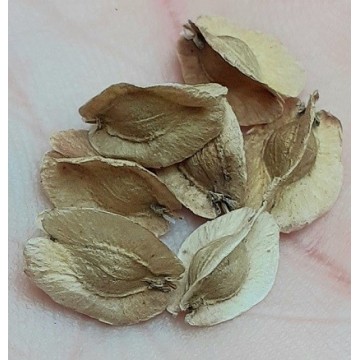


ELEPHANT'S FOOT TREE seeds
Elephant's Foot tree, also known as the ponytail palm, is a slow-growing perennial plant native to Mexico and South America.
Reaching 2 to 4 meters in height, it belongs to the Ruscaceae family.
The trunk, known as a caudex, is thick, ribbed, and gray in color. It is shaped like a bottle, which serves as a water reservoir to withstand heat during months without rain.
Ponytail palm seeds come from the Beaucarnea recurvata; they are light brown, unusually shaped, and feature three wings to allow for better dispersal by the wind. They measure 1 centimeter in length and weigh only a few centigrams.
The leaves are thin and very long, grouped in a tuft at the top of the plant. They measure between 20 and 80 cm in length, depending on the age of the tree.
During sowing, it is important to use a light substrate rich in organic matter. Once established, it thrives in mineral-rich, highly draining soil to prevent root rot.
Like most succulents, it requires a sunny to partially shaded exposure.
It grows best when temperatures range between 20 and 35°C; growth stops below this range. It is not hardy and will not survive freezing temperatures. It is essential to bring the plant indoors before winter. In mild climates, it can be grown directly in the ground.
Due to its original habitat, this caudex plant does not need much water. One watering per week is sufficient during the summer. In winter, water once a month with a small amount.
Cuttings: It can also be propagated by "smothered" cuttings of its secondary stems. Cut a small branch and place it in a slightly moist mixture of equal parts potting soil and sand.
Regularly prune the dry bottom leaves that appear as the plant grows. Apply a slow-release fertilizer once a year.
Your review appreciation cannot be sent
Report comment
Report sent
Your report cannot be sent
Write your review
Review sent
Your review cannot be sent

check_circle
check_circle


