


€3.99
Reference: 1232


SKUNK VINE, 10 - 15 cm tall
Cheese vine, Skunk vine also known as Vegetable Cheese, Camembert-tasting plant, or Paederia lanuginosa in Latin, is an climbing plant unusual and amazing native to Asia, belonging to the Rubiaceae family.
Commonly known as Mo-Long, this fast-growing vine can reach several meters in height in just one year.
It climbs by twining itself around fences, trees, and any other available supports.
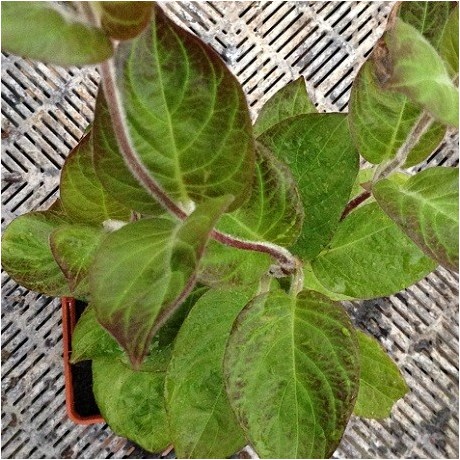
The leaves are smooth, heart-shaped, green on top and purple underneath.
They are generally arranged oppositely along the stem. The leaves vary in size, typically measuring between 5 and 15 centimeters in length. When crushed, they release a distinct aroma of Camembert cheese.
Cheese plant seeds are black, round, and measure about 5 millimeters in diameter.
Its small, bell-shaped flowers bloom in dense clusters during the summer. They range in color from pale pink to dark purple.
The blossoms emit a pleasant fragrance that attracts pollinators such as bees and butterflies.
It thrives in fertile soil rich in organic matter. Use a mix of 50% potting soil, 30% compost, and 20% sand.
Paederia lanuginosa prefers partial shade or a very bright location rather than direct full sun.
The vegetable cheese plant is not hardy; it freezes as soon as temperatures drop below zero degrees Celsius.
If the frost is light, it may regrow from the root system.
Its USDA hardiness zone is 9.
For ideal development, temperatures should be between 20 and 35 °C.
This surprising climber requires a lot of water to grow well; watering every three days is recommended during the summer.
In winter, water once every 15 days
Mo-Long is propagated by seeds but also by stem cuttings toward the end of spring.
In fact, this second method is how I produce the robust, well-rooted cheese plant currently available on the Ethnoplants website.
It occasionally attracts whiteflies, but otherwise, it is generally very hardy.
Plant throughout the year to keep it under control.
Pruning also encourages branching, allowing you to make the most of its edible foliage.
A Gastronomic Curiosity
This vine surprises with its singular foliage scent reminiscent of cheese, an audacious aromatic signature highly sought after in traditional Asian cuisine.
The leaves can be blanched for stir-fries or used as a bold garnish, providing a unique flavor profile for adventurous palates seeking new discoveries.
Vigorous Growth
A particularly dynamic climbing plant, it thrives in warm environments where it displays rapid and spectacular development.
Its hardiness makes it an ideal choice for quickly covering structures, requiring minimal maintenance while offering a dense, lush presence.
Culinary Expertise
Handling its leaves requires a bit of culinary practice to tame its powerful aroma and fully harness its unique flavor potential.
It is an essential collector's plant for curious gardeners wishing to explore lesser-known flavors and global botanical curiosities.
This article was written by Julien on 09/24/2026.
Your review appreciation cannot be sent
Report comment
Report sent
Your report cannot be sent
Write your review
Review sent
Your review cannot be sent
Reference: 1222
check_circle
check_circle


