


€3.99
Reference: 1232


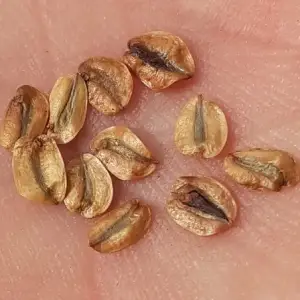
GIANT SEQUOIA seeds
Giant Sequoia is a very large, fast-growing conifer from the Cupressaceae family.It is native to the Sierra Nevada region of California, in the United States. It is the most voluminous tree on the planet.The largest specimens generally reach a height of 50 to 85 m and a diameter of 6 to 8 m. General Sherman, the most imposing one, stands 83 m tall with a circumference of 30 m, and weighs 1,200 tons. This species can live for more than 3,000 years and adaptgiant sequoia is a very large, fast-growing conifer in the Cupressaceae family. It is native to the Sierra Nevada region of California, USA. It is the most massive tree on the planet.
The largest specimens generally reach a height of 50 to 85 m and a diameter of 6 to 8 m. General Sherman, the most imposing, stands 83 m tall with a circumference of 30 m, a volume of 1,400 m³, and weighs 1,200 tons. This species can live for more than 3,000 years and adapts well to the European climate.
Its fruits are brown cones that resemble pine cones, filled with elongated seeds. Its bark is soft, reddish-brown, and fibrous. It is flame-shaped when the tree is young, becoming more irregular as it matures. It is easily recognizable by its leaves and bark. Its foliage is evergreen and linear.
Giant Sequoia seeds from Sequoiadendron giganteum are small, flat, and elongated, brown in color, and measuring 3 millimeters in length. They become viable when the fruit ripens and are then dispersed by the wind.
A Giant at the Service of the Planet
A universal symbol of strength and longevity, the Sequoia, available among Ethnoplants seeds, possesses an exceptional carbon sequestration potential.
By growing this majestic tree, you actively participate in the fight against climate change while contributing to the preservation of a millennial botanical species emblematic of old-growth forests.
A Prestigious Wood for Sustainable Landscapes
Beyond its ecological role, the Sequoia is renowned for the high quality of its wood, which is naturally rot-resistant and highly aesthetic.
This ornamental variety is an excellent choice for crafting garden furniture, facade cladding, or structuring large-scale landscaping projects, offering unmatched durability against the elements.
A Major Asset for Large Spaces and Parks
Ideal for enhancing vast properties, the Sequoia brings a spectacular vertical dimension to any estate.
You are investing in a living heritage capable of spanning centuries, while creating a sanctuary for local biodiversity and an effective carbon sink for future generations.
This majestic conifer grows in a substrate that is rather acidic and well-draining.
It prefers mild to cold temperatures. It is generally grown in USDA zones 6 to 9. Its hardiness is good, resisting temperatures down to -20°C.
It is crucial to water the plant regularly to ensure its growth and health. Be sure to provide enough water, especially during periods of intense heat. However, be careful not to drown its roots if it is grown in a pot.
The easiest way to reproduce it is by sowing its seeds. It is very difficult to grow from cuttings.
Its main pests are harmful insects such as bark beetles and spanworms (inchworms). Indeed, they can cause significant damage to the bark and leaves of the tree.
This article was written by Julien on 07/15/2026.
Your review appreciation cannot be sent
Report comment
Report sent
Your report cannot be sent
Write your review
Review sent
Your review cannot be sent
Reference: 1232

check_circle
check_circle


