


Reference: 1232




Catnip, also known as Catmint or Feline Mint, is a fast-growing perennial herb. Belonging to the Lamiaceae family, this aromatic plant is native to Europe and typically stands between 30 and 50 cm tall.
The Romans cultivated it in the city of Nepeti, which is likely the origin of its Latin name, Nepeta.
Its aromatic leaves are oval-shaped with slightly serrated edges. They generally measure between 3 and 10 cm long and have a soft texture to the touch.
The leaves are grayish-green and release a strong, pleasant scent.
The flowers appear in spikes at the top of the stems and are usually lilac or mauve in color. Each flower is about 2 to 3 cm tall and tube-shaped. Flowering occurs in summer and attracts not only cats but also various pollinators, such as bees.
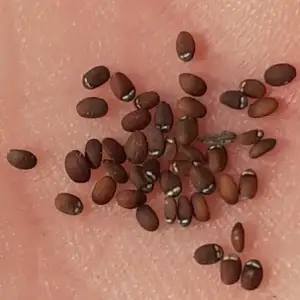
Catnip seeds from Nepeta cataria are small and oval-shaped. They are generally brown or black with a white edge on the top and measure 2 to 3 millimeters in length.
Catnip grows in all types of soil as long as it is well-draining and rich in humus. For pot cultivation, adding a little vermiculite to the substrate is recommended.
It does not require much watering. One or two waterings per week in summer is more than enough for healthy development. In winter, the plant enters a dormant phase, so regular watering is unnecessary.
This herb requires a lot of light. It should be placed in full sun to ensure beautiful flowering. For indoor cultivation using artificial light, HPS (High Pressure Sodium) or MH (Metal Halide) lamps are preferred.
It grows very well when temperatures are between 15 and 25°C. It is a very hardy variety that will easily withstand significantly negative temperatures.
Your review appreciation cannot be sent
Report comment
Report sent
Your report cannot be sent
Write your review
Review sent
Your review cannot be sent
Reference: 0215
Reference: 1241
Reference: 1175
Reference: 0178

check_circle
check_circle


