


Reference: 1232



Monkshood, also known as Wolfsbane or Aconitum napellus in Latin, is an extremely poisonous, hardy, and fast-growing perennial plant belonging to the Ranunculaceae family. Native to Europe, it typically reaches a height of 1 to 1.40 meters. It is considered one of the most dangerous and toxic botanical varieties in the world.
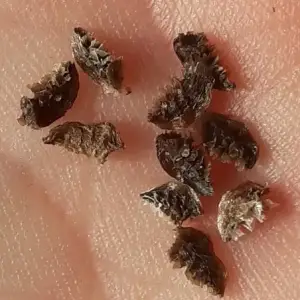
Monkshoode seeds are black, about 5 millimeters long, finely textured, and very light, allowing for rapid dissemination by the wind.
The flowers form upright clusters of intense blue-violet. The blooming period is long, appearing in summer on tall, robust stems.
Its foliage consists of large, dark green, slightly hairy leaves that are deeply lobed and divided. The leaves are arranged in rosettes at the base of the plant and can measure up to 20 cm in length.
Ornamental Use in the Garden
This plant is highly appreciated in flowerbeds for its spectacular deep violet-blue spikes and finely cut foliage.
It brings an elegant vertical structure to mountain gardens or cool, shaded areas. It is often positioned at the back of borders for its majestic summer flowering and graphic silhouette.
Use in Botanical Cultivation
Aconite is a fascinating subject of study for enthusiasts of botany and medieval plant history due to its unique natural properties.
Its cultivation allows for the preservation of an iconic wild species of alpine zones while observing its particular life cycle. It is used by collectors to enrich themed gardens dedicated to plants of character.
Wolfsbane requires cool, moist soil rich in minerals and organic matter. Ensure good drainage in pots using gravel or clay pebbles. In the ground, choose a site that is not too dry, preferably with calcareous (alkaline) soil.
It does not require much watering as it is a very hardy plant. Once a week in mid-summer is sufficient for potted plants. In the ground, the plant generally does not need watering.
It should be grown in partial shade if in a pot, or full sun if planted in the ground. For artificial lighting, HPS or horticultural LEDs are preferred.
This perennial grows very well between 5 and 25°C. It has a generally fast growth rate year-round and is not affected by heavy frosts. Its USDA zone is 4-8.
There are two ways to reproduce it: by seed or by dividing the rootstock in autumn.
It is not particularly sensitive to pests or diseases, though it occasionally suffers from aphids or powdery mildew (fungal attack).
Prune dry parts at the end of autumn and remove dead leaves.
This article was written by Julien on 07/09/2026.
Your review appreciation cannot be sent
Report comment
Report sent
Your report cannot be sent
Write your review
Review sent
Your review cannot be sent

check_circle
check_circle


