


Reference: 1232



Curuba, also known as the Banana Passionfruit (Passiflora mollissima), is a climbing plant from the Passifloraceae family.
This fast-growing pink vine grows naturally in the Andes mountain range, where it can reach up to 5 meters in height.
This variety features dense, lush foliage. Its leaves are palmate and bright green, offering a refreshing appearance.
Its pink flowers are remarkably intricate and colorful. The ten petals form a spectacular crown-like shape. Their exotic look and subtle fragrance attract pollinators.
The fruits are elongated and ovoid, covered in a thin yellow skin when ripe. Inside, they contain an aromatic pulp prized for its sweet and slightly tangy flavor. These fruits add a tropical touch to the plant and can be eaten fresh or processed.
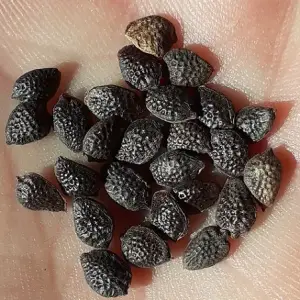
Banana passionfruit seeds are black, slightly rough, and elongated.
A Fruity Treasure from High Altitudes
Native to the majestic Andes mountains and the fertile lands of Brazil, the banana passionfruit is distinguished by its elongated fruits, whose shape resembles that of a small banana.
This spectacular vine has also perfectly acclimated to the island of Madeira, where it deploys its elegant silhouette along stems to offer a generous and visually atypical harvest.
Gastronomic Excellence and Subtle Scents
The pulp of this exotic fruit, with its sweet and aromatic flavor, is enjoyed fresh as well as in sophisticated culinary preparations.
It is particularly prized for delicately flavoring ice creams, refreshing drinks, and fine pastries, bringing an authentic note of South American terroir to your gourmet creations.
Vertical Aesthetic and Biodiversity
In the garden, this "climbing banana" variety is a valuable ally for greening tall structures thanks to its dynamic growth and its often-pink, pendulous blooming.
It transforms any support into a cascade of hanging fruits, creating a space that is both nourishing and ornamental, which will delight collectors of rare plants and lovers of distant flavors.
This climber grows in light soil rich in organic matter (humus-based). The substrate should be well-drained and slightly acidic. It is important to avoid heavy or clay-heavy soils that retain too much water.
The upper part of the plant requires a sunny exposure, while the base prefers a shaded spot. It should be placed where it can receive at least 4 to 6 hours of direct sunlight per day. Full sun promotes better flower and fruit production.
This tropical plant prefers temperatures between 20 and 30°C. It is frost-sensitive; temperatures below 10°C can damage the plant. Outside of its natural hardiness zones (Zones 9 to 11), it must be grown in a greenhouse or in a pot to be brought indoors for winter.
Curuba requires regular watering to keep the soil moist, without allowing water to stagnate. Moderate watering in summer is ideal, ensuring the soil is not oversaturated. In winter, watering can be spaced out every few days.
Propagation is mainly done by seeds or cuttings. Taking semi-hardwood cuttings in a humid, confined environment ("à l'étouffée") is a faster and more effective method, ensuring a plant identical to the parent.
This vine can be attacked by pests such as aphids, whiteflies, or mealybugs, which can weaken the plant. Common diseases include verticillium wilt, root rot, or fusarium wilt, especially in cases of overwatering or poor ventilation.
This article was written by Julien on 07/09/2026.
Your review appreciation cannot be sent
Report comment
Report sent
Your report cannot be sent
Write your review
Review sent
Your review cannot be sent

check_circle
check_circle


