Reference: 1232



Dog rose is or rosehip tree a perennial thorny plant from the Rosaceae family. It generally measures 2 meters in height and grows relatively fast. It is found in Europe, Asia, and North Africa in varied habitats such as hedges, roadsides, and wasteland.
Its leaves are composed of several leaflets, usually five to seven, arranged alternately along the stems. They are elliptical to ovate in shape, with finely serrated edges. Their surface is often glossy and intense green, while the underside is lighter and slightly pubescent. In autumn, the leaves take on golden and red hues.
Flowers are of a delicate beauty and appear in clusters of 3 to 12 flowers during the spring and early summer. They are pale pink to white, with five petals that bloom around a center of golden stamens. The flowers release a subtle and pleasant fragrance.
Its fruits, called rosehips, are globular and fleshy berries that ripen from late summer through autumn. Their color ranges from bright red to orange, and they are often covered with a thin waxy layer.
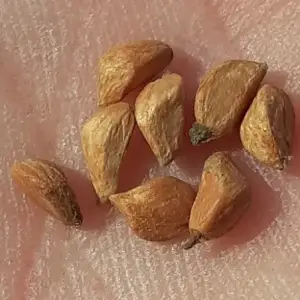
Dog rose seeds from Rosa canina are yellow and possess fine, stinging hairs.
The Wild Rose: The Wild Pillar of Rose Gardens
A robust, hardy, and particularly vigorous shrub, Rosa canina (commonly known as the Dog Rose or Wild Rose) is the indispensable ally of gardeners and nurserymen: it historically serves as a natural and resistant rootstock for many varieties of collector roses.
Its rustic habit, arched stems, and delicate flowers with five white-pink petals make it an ideal landscape hedge plant or solitary shrub to structure an ecological garden, actively attracting pollinating insects while offering exceptional resistance to diseases and severe frosts.
Wild Gastronomy: The Taste Treasures of Rose Hips
The fruits of the wild rose, called rose hips, are true concentrates of wild flavors.
Harvested at full maturity, ideally after the first autumn frosts which soften their pulp, they offer a sweet, tangy, and highly fruity flesh.
They are perfect for topping dairy products or for making old-fashioned jams, syrups, fruit pastes, and artisanal jellies.
This thorny plant grows very easily in well-drained soils rich in organic matter. It adapts to various types of substrates but thrives particularly in light, fertile land.
This defensive shrub loves sunny exposures, which promote abundant flowering. It can also tolerate partial shade, but sufficient light is essential to ensure good flower and fruit production. In general, a south or southwest exposure is ideal for its development.
It is very resistant to temperature variations. It can withstand temperatures ranging from -20°C to +30°C. This makes it a plant well-suited to temperate climates, and it is often found in regions where winters can be very severe. Its hardiness is excellent.
Once established, this pink wild rose requires little watering as it is relatively drought-resistant. However, during its early growth phases or during prolonged dry spells, providing water will encourage better rooting. It is important to avoid excess water, as this can lead to root rot issues.
It reproduces mainly sexually, meaning by seed. it can also be propagated by cuttings in summer on semi-hardwood or by layering at the beginning of spring.
Like many roses, Rosa canina is subject to various predators. Insects such as aphids and mites can infest its leaves, while the larvae of certain butterflies feed on its stems. Fungal diseases, such as rust or powdery mildew, can also affect the health of its foliage, especially in humid conditions.
This article was written by Julien on 07/09/2026.
Your review appreciation cannot be sent
Report comment
Report sent
Your report cannot be sent
Write your review
Review sent
Your review cannot be sent

check_circle
check_circle